Brownfields assessment services to evaluate contamination present in soil, soil gas, and groundwater related to historical site uses and cleanup planning to support redevelopment
background
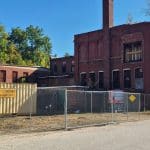
The approximate 1.2-acre site consists of two vacant structures; a former armory on the west side of the property and the former Stanley Mill on the east side. The site is adjacent to the Winnipesaukee River and is part of the Franklin Falls Historic District. Initially, G.W. Griffin Company operated a hacksaw manufacturing mill from approximately 1897 to 1979. The armory was constructed in 1911 and was used by the New Hampshire National Guard until 1935 when the G.W. Griffin company purchased the armory. In 1979 the Stanley Works purchased the property and operated on the Site until 1986. The property was then passed to the Franklin Falls Trust and in 1995 was transferred to the Ferrari Realty Trust. Previous investigations have identified the presence of hacksaw blade waste/industrial waste in fill material used to level and extend the property to the north, toward the Winnipesaukee River. The City of Franklin acquired the property in 2022 with the intent of remediating environmental impacts and preparing the property for beneficial reuse to support new housing construction in the vicinity.
scope of services
Prior Brownfields assessments identified the presence of soil and groundwater contamination in connection with historical site activities, primarily improper waste disposal practices related to hacksaw blade production. Primary contaminants of concern at the site were identified as polycyclic aromatic hydrocarbons (PAHs), metals, and chlorinated volatile organic compounds (CVOCs). A fuel oil UST was also discovered which required assessment and removal. The mill building has been deemed structurally unsound and has been condemned, requiring demolition. Demolition will require abatement of hazardous building materials are present.
Nobis performed investigations at the Site which included the collection of shallow and subsurface soil samples, collection of groundwater samples, soil gas sample collection and vapor intrusion evaluation, UST removal and closure, and hazardous building materials survey. Soil and groundwater sampling data collected during the TBA were compared to criteria established by the New Hampshire Department of Environmental Services (NHDES) regulations Env-Or 600, to evaluate potential risks associated with contaminated environmental media. Areas of contaminated soil and buried industrial waste containing discarded hacksaw blades were identified that require remediation. With the information collected, Nobis prepared a Remedial Action Plan/Assessment of Brownfields Cleanup Alternatives which evaluated remedial alternatives and cost estimates for mitigating the contaminants of concern.
With technical support from Nobis, the City was successful in obtaining $3 million in funding support from EPA, NHDES, InvestNH, and Lakes Region Planning Commission to implement building abatement and demolition and remedial action at the Site. Nobis is currently updating the RAP/ABCA, preparing a site-specific QAPP, engineering soil excavation and riverbank restoration specifications, and assisting with contractor bid package preparation and selection in anticipation of impending demolition and remediation at the Site.
benefits
- Utilizing Brownfield Assessment Grants and other funding sources to assist the City of Franklin in the investigation and cleanup of a former armory and mill in a historic district.
- Comprehensive evaluation and remediation planning to address groundwater, PAH-contaminated soils, and buried industrial waste fill material in support of remediation and redevelopment needs with a NHDES-approved Remedial Action Plan.
- Enabling the City of Franklin to prepare the site for beneficial cleanup and reuse, with intent to bring the site back into City Tax Role and revitalize site and surrounding area of downtown that was in decline.
challenges
- Hazardous building materials within the mill are comingled with other materials and the building is structurally unstable, making estimation of cost and methods of abatement implementation challenging.
- Remediation source areas abut the Winnipesaukee River and require specific design for removal and restoration to protect the river and prevent erosion to the river.
- Elevated costs of construction and disposal yielded contractor bid estimates that exceeded the original funding planned for the project.
solutions
- Nobis assisted the City with demolition contractor selection to identify a contractor with the appropriate experience and resources to perform demolition and abatement meeting the requirements of NHDES.
- Nobis’s civil and geotechnical engineers are designing a riverbank excavation and restoration plan specification meeting the requirements for Shoreland Protection and Wetlands regulations.
- Nobis coordinated with the City, NHDES, EPA, and LRPC to identify funding sources to address the overall funding deficit identified and help the project move forward.
results
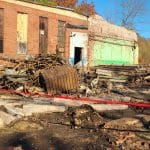
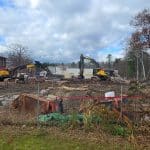
Site demolition activities took place to address the mill and portions of the armory building and to prepare the Site for soil excavation. The cleanup project was completed in 2025.