Brownfields assessment and cleanup planning to support redevelopment of a former paper mill waste site as a municipal park
Nobis Group supported the Town of Lincoln in evaluating and planning the redevelopment of approximately 22 acres at 63 Recycle Road as Riverfront Municipal Park. The Town-owned property borders the East Branch of the Pemigewasset River and includes areas historically used by the J.E. Henry/Franconia Paper Mill for industrial waste disposal, a former paper mill sludge disposal area, and the capped Burndy Landfill which received electroplating waste sludge. The planned park includes parking, restrooms, a skate park, kayak/canoe access, performance and event spaces, a pavilion, playgrounds, a dog park, trails, pathways, and lawn and green space.
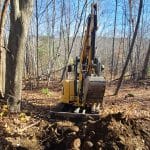
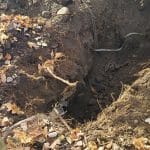
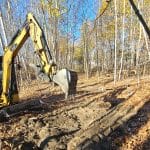
Nobis performed phased environmental and geotechnical services beginning with test pit oversight and soil sampling, followed by support for an EPA Targeted Brownfields Assessment and a Supplemental Site Assessment. Investigations included test pits, soil borings, monitoring well installation and sampling, sludge characterization, laboratory analysis, data evaluation, and contaminant delineation. Results identified PAHs, TPH, arsenic, barium, lead, and mercury above applicable soil standards in portions of the northern site, arsenic in the former sludge disposal area, and localized PFAS and metals impacts in groundwater. Nobis prepared a Remedial Action Plan and Assessment of Brownfields Cleanup Alternatives to support cleanup funding sought by the Town and to guide future park remediation and construction.
challenges
- The property contains unconsolidated historical fill, ash, slag, metal, wood, paper mill sludge, and other debris associated with more than a century of industrial use.
- Contamination is distributed across soil, sludge, and localized groundwater impact areas, while the redevelopment plan requires safe public access and integration with proposed recreational features.
- The site cleanup and redevelopment must address updated NHDES soil standards, wetland and river-adjacent conditions, construction feasibility, long-term sustainability, and Brownfields funding requirements.
solutions
- Completed phased subsurface investigations using test pits, soil borings, monitoring wells, sludge sampling, and laboratory analysis to define contaminant types and distribution.
- Prepared a NHDES and EPA-compliant RAP/ABCA evaluating three cleanup alternatives for effectiveness, feasibility, risk reduction, treatment time, sustainability, and cost.
- Recommended targeted sludge and accessible lead-impacted soil removal with off-site disposal, construction of a clean soil cap to isolate residual waste, an AUR, groundwater monitoring, and long-term cap inspection and maintenance following park construction.
results
The investigations defined the primary soil contaminants of concern and localized groundwater impacts and established the basis for remedial design. The updated RAP/ABCA a remedial alternative that balances targeted waste removal with capping of remaining impacted fill, supports the planned municipal park reuse, and avoids the substantially higher cost and construction impacts of removing deep lead-impacted soil. The plan provides a cleanup framework for future funding, permitting, remedial construction, institutional controls, groundwater monitoring, and long-term cap maintenance.