Environmental evaluation and engineering design and oversight for closure of a municipal septage lagoon facility to remediate PFAS contamination in groundwater
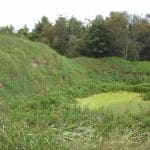
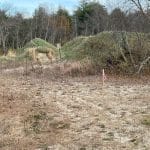
The Town of Hopkinton contracted with Nobis to close the jointly owned Hopkinton-Webster Septage Lagoons facility through construction of a septage residual monofill. The lagoons ceased accepting septage in January 2022 following regulatory review and identification of compliance concerns by the New Hampshire Department of Environmental Services (NHDES), including the presence of per- and polyfluoroalkyl substances (PFAS) in groundwater. Over decades of operation, the lagoons have generated an estimated 20,000 cubic yards of biosolid residuals that are currently a source of ongoing groundwater contamination at the site.
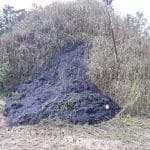
As part of the lagoon closure evaluation, NHDES required characterization of septage residuals stored in the lagoons and perimeter berms. Sampling conducted by Nobis identified multiple contaminants of concern, including widespread detections of PFAS in all residual samples. Routine groundwater monitoring performed in accordance with the facility Groundwater Discharge Permit (GDP) documented PFAS concentrations exceeding Ambient Groundwater Quality Standards (AGQS) in downgradient monitoring locations. Data evaluations concluded that septage residuals are a primary source of PFAS contamination in groundwater at the lagoon facility.
To address ongoing impacts to groundwater and possible downgradient water supply receptors, the closure approach selected following completion of a remedial alternatives evaluation was to permanently close the facility and construct a monofill to consolidate and encapsulate septage residuals. The selected remedy provides long-term containment of residual materials while avoiding the significantly greater cost and environmental impacts associated with excavation and off-site disposal. The project will be completed in three phases: (1) design, permitting, and preparation of required closure plans; (2) dewatering, excavation, and consolidation of residual sludge materials; and (3) construction of a dedicated monofill cell with a low-permeability cap, site restoration, and material testing. Use of a low-permeability cap has been incorporated into the design to further reduce infiltration and minimize future PFAS leaching to groundwater. Currently, the NHDES regulations for biosolids and residuals management do not include provisions for monofill construction. Nobis used best engineering practices including solid waste engineering standards to guide the design, which is innovative and unique in New Hampshire for on-site residuals management.
challenges
- Limited regulatory framework for management of septage residuals in a monofill required extensive coordination with multiple NHDES bureaus.
- Wildlife review determined the project is within habitat areas for threatened species, limiting construction and requiring consideration of full-time monitoring by a biologist.
solutions
- Utilization of best engineering design practices in an innovative way to address closure of the facility and minimize future groundwater impacts.
- Construction phasing allows for placement of dewatered residuals pack into the original lagoon facility footprint, limiting the area of encumbrance.
- Nobis received approval from NHDES to include disposal of sludge residuals from maintenance of the Town waste water treatment facility lagoons as an added value to the Town.
results
Based on the significant financial need demonstrated by the Town in conjunction with imminent risk to groundwater and nearby receptors, the Town was successful in obtaining a Clean Water State Revolving Fund loan for $4 million with 10% forgiveness. Currently, the closure design has been reviewed and approved by NHDES, and Nobis is in the process of completing required SRF supporting documents and contractor construction plans and bid specifications. Successful completion of the closure will eliminate an aging wastewater management facility, reduce risks to groundwater resources, and establish a cost-effective and potentially replicable approach for managing PFAS-impacted septage residuals in New Hampshire.